

HOW TO CHOOSE A FLOOD BARRIER. THE SIX THINGS THAT MATTER.
Written by the people who fabricate them, for homeowners who are still deciding. Including the part where we tell you when you do not need us.
Every flood barrier company will tell you theirs is the best one. This is the other conversation. What to look for in a flood barrier, when an off the shelf DIY barrier is genuinely enough, and the point where you need something measured to your home.
The right barrier depends on the house, not the brochure.
Most flood barrier shopping goes the same way. You search, you find products at wildly different prices, and nothing explains why. So price becomes the tiebreaker by default.
That is the wrong tiebreaker, and not because cheap is bad. It is wrong because the real question is whether a given barrier actually fits and seals the openings you have. A perfectly good product on the wrong opening is not protection. It is a gap with hardware around it.
We fabricate custom systems, so we have an obvious bias. We are still going to lay out the six things that decide this, and be straight about which ones point toward a simpler purchase. If you finish this page and order something off the internet, we would rather that than sell you something you did not need.

Six things to settle before you buy anything.
Work through these in order. By the end the right category picks itself, and you will know exactly what to ask any company you talk to, including us.
How many openings
Count every route water can take. Front and side doors, the garage, sliders, French doors, flood vents, the sewer line, the generator pad. Most homeowners are surprised by the number.
Ask: does this product cover all of them, or am I buying one at a time?
How wide is the widest
Width is the hardest engineering problem in this category. A three foot door and a sixteen foot slider are not the same job. Pressure across a wide span is what bends a barrier at the center, exactly where a bend breaks the seal.
Ask: what is the maximum span, and what supports it in the middle?
Material and thickness
Thickness is not a vanity spec. It is what determines whether a panel stays flat under load. Aluminum, steel, polymer and fabric all behave differently, and thin material on a wide opening is the most common failure point in the category.
Ask: what is the material, how thick, and what pressure is it rated to?
How it seals
A barrier is only as good as its seal. Compression gaskets that tighten as water pushes against them behave very differently from foam strips, tape or weatherstripping. Look closely at the joint where the barrier meets the building.
Ask: what kind of gasket, and does it get tighter or looser under pressure?
Fit and installation
Made to a size range or made to your opening? Florida homes settle, get renovated, and rarely match their original specs. This is the difference between a barrier that seals and one that nearly seals, and nearly is the whole story.
Ask: is this measured to my openings, and who installs it?
Deployment and support
Storm day is a bad day to learn a product. How long does it take to put up, can one person do it, and is there anyone local to call when a cone appears? Support during the week that matters is worth as much as the hardware.
Ask: how long to deploy, and who answers the phone in October?
Off-the-shelf barriers versus custom systems.
These are the two real options for a Florida home. Neither one is wrong. They solve different sized problems.
| Off-the-shelf DIY barriers | Custom engineered systems | |
|---|---|---|
| What it is | A product bought online or in store, shipped to you | A system measured, fabricated and installed for your home |
| Fit | Preset size ranges. Your opening has to fall inside one | Measured to the millimeter for each opening |
| Wide openings | Limited by the available size range | Reinforced channels and center supports designed for the span |
| Garages and sliders | Often outside what the range covers | A core use case, including corner and L shaped openings |
| Installation | You, in the hours before the storm | Professionally mounted channels, then minutes to deploy |
| Whole home coverage | One opening at a time, as you buy units | Every opening mapped in one assessment |
| Support | Retailer or manufacturer, usually remote | Local team, before and during the storm |
| Up front cost | Lower | Higher, covers the whole house, redeploys every season |
| Best for | Renters, one standard doorway, a backup in the closet | Homeowners protecting an entire property in a surge zone |
This compares product categories, not specific brands. Specifications vary between manufacturers and change over time, so confirm current specs with any company before you buy, ours included.
Which category is right for you.
Off-the-shelf makes sense if
- You rent, or you are not staying in the home long
- You have one standard size doorway to cover
- You want something in the closet as a backup
- Budget right now is the deciding factor
A DIY barrier beats sandbags. We will say that out loud even though we build the other thing.
A custom system makes sense if
- You own the home and plan to be there through more seasons
- You have a garage, wide sliders or non standard openings
- You want the whole house sealed, not one door
- You want it ready before a storm is named, not ordered after
- You want a local team to call when the cone shows up
Protecting one door and leaving the garage open is like locking the front door and leaving a window up. Water does not pick one entry point.
Measured, fabricated, and sealed here.
2.5X stronger. Better sealed.
Aerospace-grade aluminum that is 2.5X the thickness of most competing products, rated to 40,000+ PSI. That thickness is our answer to the span question, because it is what keeps a panel from flexing at the center of a wide opening. Dual-phase EPDM gaskets strengthen as water rises against them. Rated to hold back up to 10 feet of water.
Founded by homeowners who flooded.
Helene put water in our founders’ homes. This company is the answer they wished existed before the storm. Every system is assessed, fabricated and installed in-house in St. Petersburg. No subcontractors, no shipped kits, no guessing at fit.
View System Specifications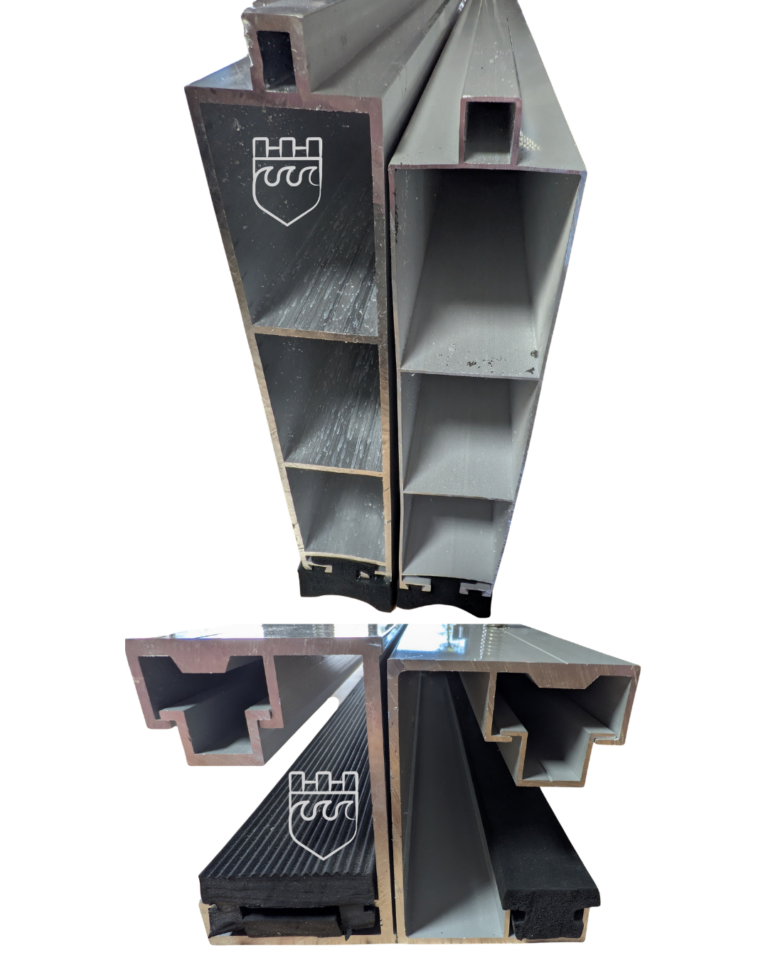
Aerospace-grade aluminum, reinforced channel depth, solid cast stainless steel hardware, and dual-phase EPDM gaskets. This is the part a size chart cannot give you.
The cheapest barrier is the one that was not there.
Fit is the whole game
A barrier that is close to the right size is not a barrier. Water finds the gap. Size ranges work until your opening falls between two of them, which in Florida homes happens constantly.
Storm day is a bad time to install
DIY only works if you fit it correctly, under pressure, while also handling shutters, water and family. Permanently mounted channels take that off storm day entirely.
Surge is the threat, not rain
The National Hurricane Center identifies storm surge as the greatest threat to life and property from a hurricane. Helene proved it across Tampa Bay without hurricane winds ever arriving here.
One opening is not a plan
Homes with a barrier still flood, through the garage, the sliders, the sewer line, the flood vents. Whole home coverage is the difference between protection and a partial answer.
What it actually looks like.
Free assessment
We walk your property, count every opening, and tell you which ones carry the most risk. No cost, no obligation, and we will tell you if you do not need us.
Exact quote
Every opening priced out so you can decide what to protect now and what can wait. Real numbers for your actual home.
Fabricated in St. Pete
Panels cut, welded and gasketed to your exact openings at our facility. Lead times are shortest early in the season.
Installed and practiced
Channels mounted, panels fitted, one practice run so you know exactly what storm day looks like before it comes.
Ready every season
Panels store flat and redeploy year after year. No repurchase, no subscription, no sandbag runs.
Choosing a flood barrier: common questions.
Are DIY flood barriers worth it?
For a single standard doorway, a rented home, or a backup in the closet, yes, and they beat sandbags. Where DIY runs out of room is wide openings, garages, sliders and whole home coverage, because those need a barrier measured to the exact opening.
How do I choose a flood barrier for my home?
Work the six items above in order: number of openings, widest span, material and thickness, sealing method, fit and installation, deployment and support. Answer those and the right category becomes obvious.
What should I look for in a flood barrier?
Exact fit, material rigid enough not to flex across the span, a compression seal rather than tape, a deployment process you can complete under pressure, and a company that answers the phone in storm season.
Do I need to protect every opening?
Water does not choose one entry point. A whole home assessment maps every route in so you can protect them in the order that fits your budget. See flood barriers for home.
How much should a flood barrier cost?
Cost tracks the number of openings and how wide each one is. See flood barrier cost for the full breakdown, or book a free assessment for an exact number.
Can I start with one opening and add more later?
Yes. Many homeowners protect the highest risk openings first and phase in the rest. The assessment maps the whole house so you know the full picture before deciding what comes first.
Don’t just take our word for it.
Our founders’ own homes flooded in Hurricane Helene. They built the company local news has covered ever since.
“The St. Pete friends’ homes were both flooded by Hurricane Helene, and they built a flood prevention system with sturdy aluminum and modular height options.”Read the FOX 13 story
“A pair of St. Petersburg flood victims opened Dam It Defense to provide residential flood barriers after Hurricane Helene impacted their homes.”Read the Bay News 9 story
“The company opened its first factory in St. Petersburg’s Warehouse Arts District a year after Helene, and the cofounders said family and community sit atop their list of priorities.”Read the St. Pete Catalyst story
“Dam It Defense launched in 2025, sold several hundred systems, and grew into a local team of nearly 20 employees.”Read the Power Broker feature
What homeowners said after they decided.
We feel very fortunate to have found Dam It Defense. The pricing was lower than any other company and the product far superior. The install team led by Andrea was thorough, professional, and did an amazing job. Everyone from the owners to the installers was knowledgeable and incredibly service oriented. It was a no brainer to go with them.
After our home flooded from Hurricane Helene’s storm surge, we decided to install flood barriers. Dam It Defense installed them at all our garage and door entryways, and they store and deploy them for us when hurricanes threaten. They answered all of our needs. The product is well constructed and heavy duty.
Lee was very informative about the system. The panels are light enough that anyone can install them, and they provided extra pieces and even offered to move the sliding system once my patio is finished. The company has been easy to work with. I have peace of mind if another hurricane comes. Would recommend this company!
I reached out to Dam It Defense and Lee came out the very next day, on time as scheduled. He went over the process, showed us samples of the panels, and measured all the entry points. He was extremely personable and patiently addressed every concern and question we had. It really put us at ease.
Real homes. Real installs. No generic kits.
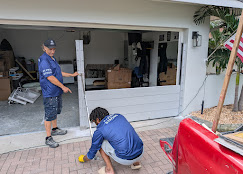
On-site install
Our team setting channel anchors on-site. Every opening is assessed and measured before a single component is fabricated.
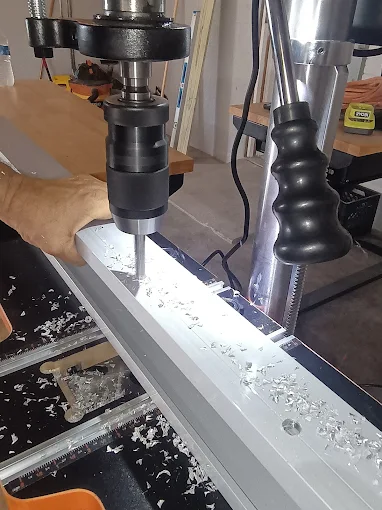
Built in St. Pete
Cut-to-measure components on our St. Petersburg floor. No generic kits. Every piece is built for your specific home.
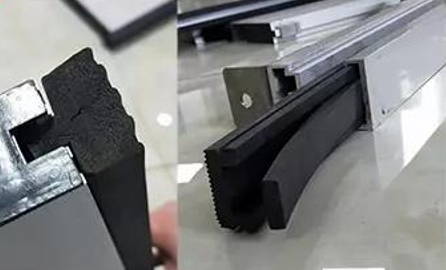
The seal that holds
Dual-phase EPDM gasket and seal components. Larger and more compression-resistant than standard barrier gaskets.
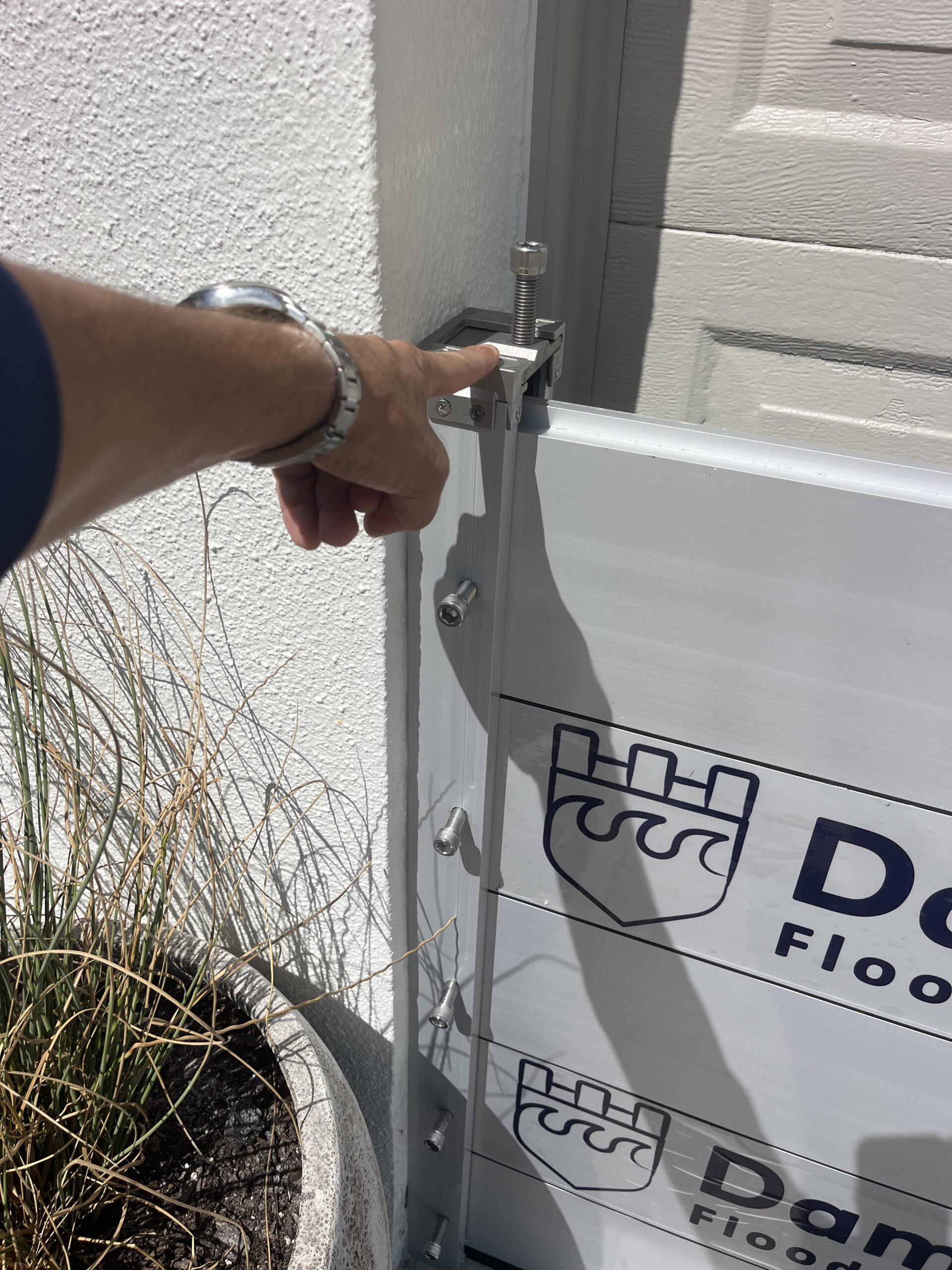
Torqued to spec
Compression hardware torqued to spec during installation. This is what creates the seal that holds under pressure.
Serving St. Petersburg, Tampa Bay, and the Gulf Coast
New to this? Start with how our flood barriers are built and rated, or see how we stack up among flood prevention companies in St. Petersburg. Looking at water-filled options too? Here is how flood barriers compare to inflatable flood tubes.
St. Petersburg
Venetian Isles
Riviera Bay
Pinellas Beaches
Indian Shores
Indian Rocks Beach
North Tampa Bay & Nature Coast
Dunedin
Safety Harbor
Spring Hill
Crystal River
Tampa
Davis Islands
Harbour Island
Ballast Point
Hyde Park
Palma Ceia
Port Tampa
Ruskin
Apollo Beach
DONE READING? LET US LOOK AT THE ACTUAL HOUSE.
Book a free flood assessment. We walk every opening on your property, tell you exactly what it would take to protect, and give you a real number. If a simpler setup covers you, we will say so. That is the whole pitch.
Dam It Defense · 695 28th Street South, Saint Petersburg, FL · Serving St. Petersburg, Tampa Bay, and the greater Gulf Coast. This guide compares product categories generally and does not describe any specific competing product.