

FLOOD BARRIERS VS INFLATABLE FLOOD TUBES. ONE SITS IN THE DOORWAY. ONE SITS ON THE DRIVEWAY.
Inflatable and water-filled flood tubes are cheap, portable and easy to buy. They also protect less than their size suggests, need level ground, and have to be filled with water before the storm shows up. Here is how they compare to panels built for your openings.
Looking at inflatable flood tubes for your home? They make sense in some places. A door, a garage or a slider usually is not one of them.
A tube is a wall you build on the ground. A panel is a door you close.
Flood tubes are long, flexible bags you lay on the ground and fill with water. The weight of the water holds them in place and the tube itself becomes a low wall.
That works best across a long, flat, open run of ground. It works a lot less well in front of a garage door on a sloped driveway, or across a slider that sits on a patio with a lip, which is where most Florida homes actually take on water.
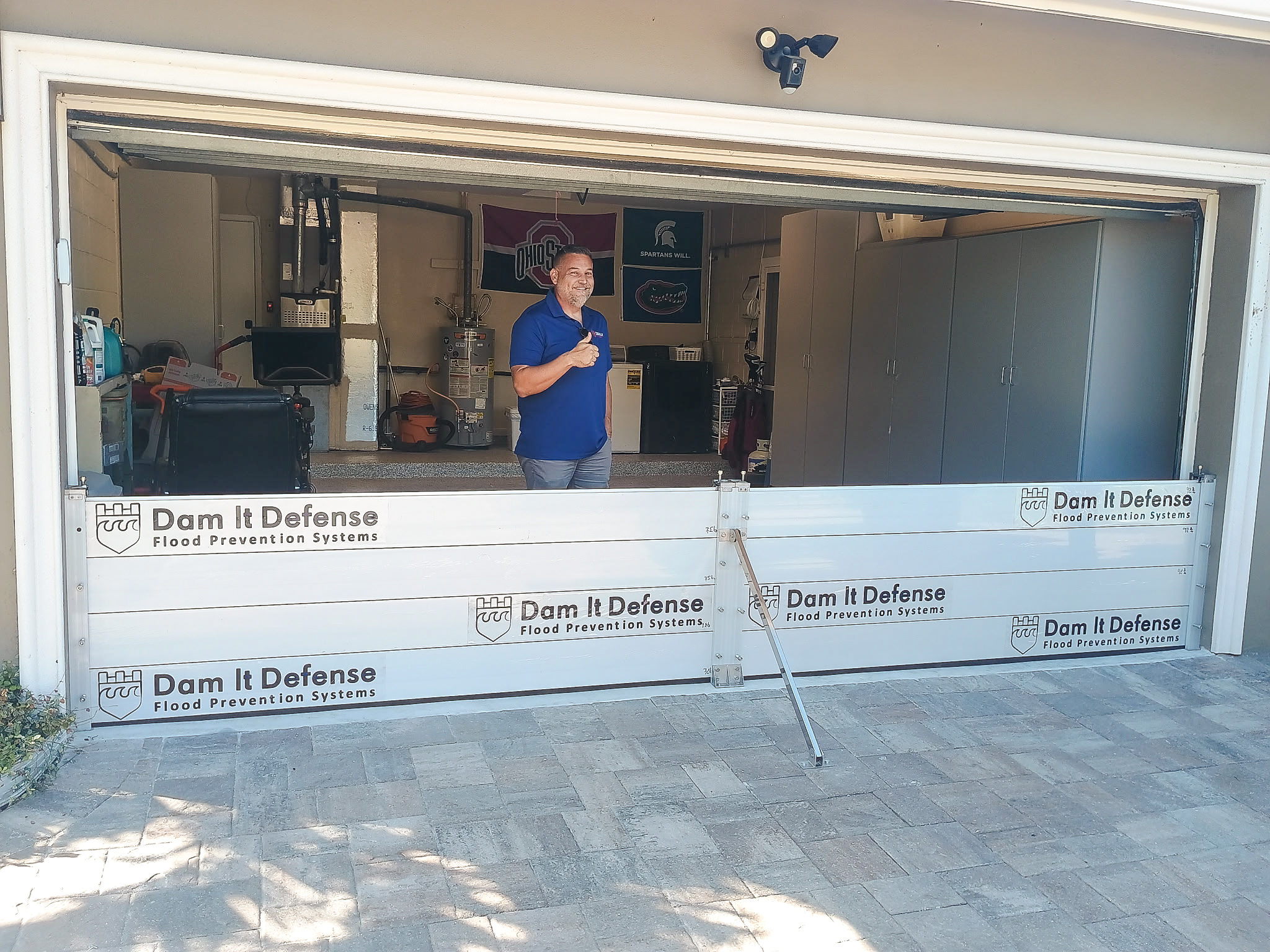
Our flood barriers work the other way around. We measure each opening, mount aluminum channels on either side once, and when a storm is coming the panels slide into those channels and seal against the house itself.
A tube protects to about three quarters of its height.
That is the rule of thumb from LSU AgCenter. Their example: a 22 inch tube may give you only about 16 inches of protection.
The whole barrier is only as high as its lowest spot.
Same source. Water-filled barriers are effective only on level ground, and any dip along the run is where the water gets over. Most Florida driveways slope toward the street by design.
Inflatable flood tubes vs custom flood barriers.
Both have a place. Here is how they compare where it counts for a Florida house.
| What matters | Water-filled flood tubes | Dam It Defense panels |
|---|---|---|
| How high it protects | About 3/4 of the tube’s height | Panels stack to the height you need, rated to hold back up to 10 feet of water |
| Ground it needs | Level ground. The lowest point sets the height of the whole barrier | Measured to each opening on site, including uneven thresholds |
| Staying in place | Can roll, slide or shift unless the design prevents it | Panels sit in aluminum channels anchored to the structure |
| Setting it up | Position it, then fill it with water. Low water pressure means a slower fill or a pump | Slide panels into channels that are already mounted. About an hour for most homes |
| Seepage | Even good systems leak, and water can seep in underground | Dual-phase EPDM compression gaskets that seal tighter as water pushes |
| Best place for it | Long, open, level runs of yard | Doors, garages, sliders and low openings |
| After the storm | Drain it, dry it, fold it, store it | Panels come down and store flat until next time |
Tube figures from LSU AgCenter’s guide to water-inflated barriers. Performance varies by product.
The four places a flood tube gets tested.
None of these are defects. They are just how water-filled barriers work, and they matter most right up against a house.
The driveway slope
A garage is usually the widest and lowest opening on the house, and the driveway in front of it is built to run water away. A tube laid across that slope is only as tall as its lowest point. Our garage door flood barriers seal the opening itself instead.
The fill
A tube is empty until you fill it. That takes a hose, time and water pressure, and LSU AgCenter notes a low municipal flow may mean you need a pump. That is a job for the day before the storm, not the morning of.
The water underneath
In LSU AgCenter’s words, even good systems leak, and some water will seep in underground. They recommend keeping a pump inside the protected area. That goes for any barrier, which is why we pair ours with backflow prevention.
The debris
Storm water carries things. A flexible bag takes that impact differently than an aluminum panel, and LSU AgCenter warns that a failed barrier can release a forceful rush of flood water.
We will tell you if you do not need panels everywhere.
Long open runs
A long stretch of flat yard where there is no opening to seal can be a fair place for a temporary barrier.
Level ground
If the ground is flat and firm, a tube has a better shot at sitting even along its whole length.
Shallow water
For a few inches of runoff, a tube sized with the 3/4 rule in mind can be enough.
Time to fill
If you are home, have water pressure and can set it up well ahead of the storm, a tube is workable.
Everything else
Doors, garages, sliders and low openings are where panels earn their keep. The assessment shows which is which.
Every opening, sealed at the opening.
Water comes through the front door, the garage, the sliders, the vents and the sewer line, sometimes all at once. Here is what covers each one.
Flood Barriers for Home
Custom panels measured to every opening on the house, not a one-size kit.
Door Flood Barriers
The threshold gap under every exterior door, sealed below the water line.
Garage Door Barriers
The widest and lowest opening you have, and usually the first one to let go.
Sliding Door Barriers
Lanai and pool deck sliders, where the track weep holes start running backwards.
Backflow Prevention
The drains. Barriers work above ground, this handles the line underneath it.
Flood Vent Covers
Foundation vents and utility penetrations, the openings nobody counts.
Weighing other options too? See how panels compare in flood barriers vs sandbags, or read how to choose a flood barrier.
Built heavier, sealed tighter, made in Florida.
2.5X thicker. Sealed under pressure.
Aluminum profiles roughly 2.5 times the thickness of most competing products, paired with larger, age-resistant dual-phase EPDM compression gaskets that seal tighter as water pushes against them. Rated to hold back up to 10 feet of water.
We build it. We install it. Nobody else touches your house.
Our founders’ own homes flooded, which is the reason this company exists. Every system is assessed, fabricated and installed in house. The people who measured your openings are the people who mount the channels.
View system specifications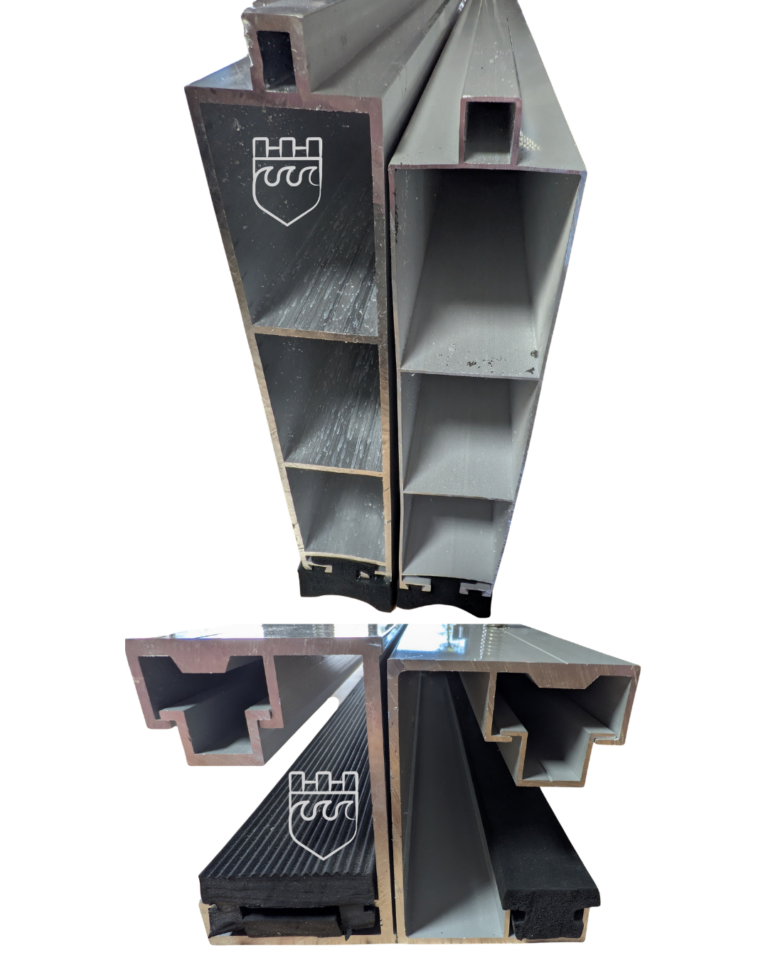
Reinforced cross sections, deeper channels, solid cast stainless hardware and dual-phase EPDM gaskets.
What homeowners say after the install.
After our home flooded from storm surge, we decided to install flood barriers. Dam It Defense installed them at all our garage and door entryways, and they store and deploy them for us when hurricanes threaten. They answered all of our needs. The product is well constructed and heavy duty.
Lee was very informative about the system. The panels are light enough that anyone can install them, and they provided extra pieces and even offered to move the sliding system once my patio is finished. The company has been easy to work with. I have peace of mind if another hurricane comes. Would recommend this company!
We feel very fortunate to have found Dam It Defense. The pricing was lower than any other company and the product far superior. The install team led by Andrea was thorough, professional, and did an amazing job. Everyone from the owners to the installers was knowledgeable and incredibly service oriented. It was a no brainer to go with them.
I reached out to Dam It Defense and Lee came out the very next day, on time as scheduled. He went over the process, showed us samples of the panels, and measured all the entry points. He was extremely personable and patiently addressed every concern and question we had. It really put us at ease.
Inflatable flood tubes: common questions.
Are inflatable flood tubes worth it?
For a long, open, level stretch of yard, they can be. For a door, garage or slider, they are the weaker choice. A water-filled tube protects to only about three quarters of its own height, needs level ground, and has to be filled before the storm arrives.
How high do they actually protect?
Less than their size suggests. LSU AgCenter notes water-filled barriers generally protect against water about 3/4 the height of the barrier, so a 22 inch tube may give you only about 16 inches.
Can I put one in front of my garage?
You can, but most Florida driveways slope toward the street, and water-filled barriers work best on level ground. The barrier is only as high as its lowest point, so any dip becomes the spot where water gets over.
Do flood barrier panels leak?
Any barrier can pass some water, which is why we measure every opening on site and use dual-phase EPDM compression gaskets. Barriers also do nothing for water coming up the drains, which takes backflow prevention.
How long do panels take to put up?
Most homes deploy in about an hour, because the channels are already mounted. A tube has to be positioned and filled, and low water pressure can make that take longer than planned.
What do panels cost?
It depends on how many openings you protect and their size, since every system is built to your house. Our flood barrier cost page walks through what drives the number.
Serving homeowners across Florida
See how our flood barriers are built and rated, or see how we compare among flood prevention companies in St. Petersburg.
A TUBE ON THE DRIVEWAY OR A SEAL ON THE DOOR. LET US SHOW YOU THE DIFFERENCE.
Book a free flood assessment. We walk your property, measure every opening, look at where the water actually goes on your lot, and tell you straight which openings need panels and which do not. No charge, and the plan is yours either way.
Dam It Defense · 695 28th Street South, Saint Petersburg, FL · Serving homeowners across Florida